
Professional sports and action photographers measure cameras in fractions of seconds. A 10ms difference in shutter lag determines whether you capture the defining moment or the frame before it. A 5fps gap in burst speed decides whether you nail the peak expression or come back with 300 near-misses. At the extreme end of professional mirrorless, milliseconds matter.
Sony has owned this space for years. The A9 III, with its global shutter sensor and blackout-free 120fps electronic burst, pushed the technical boundaries of what a mirrorless camera can do. The A1 II combined that speed pedigree with a 50MP sensor, giving sports photographers resolution and speed in a single body for the first time.
But the rumor community is not done with the A1 line yet. Community discussion, industry analysts, and various forum sources point toward a possible Sony A1 IIH: a dedicated high-speed variant of the A1 II platform, tuned specifically for the photographers who need maximum frame rate, minimum blackout time, and the fastest possible sensor readout on the market.
This blog breaks down what we know, what makes technical sense, and what a camera like the A1 IIH would mean for professional photographers.
Understanding the “H” Designation: What It Would Represent
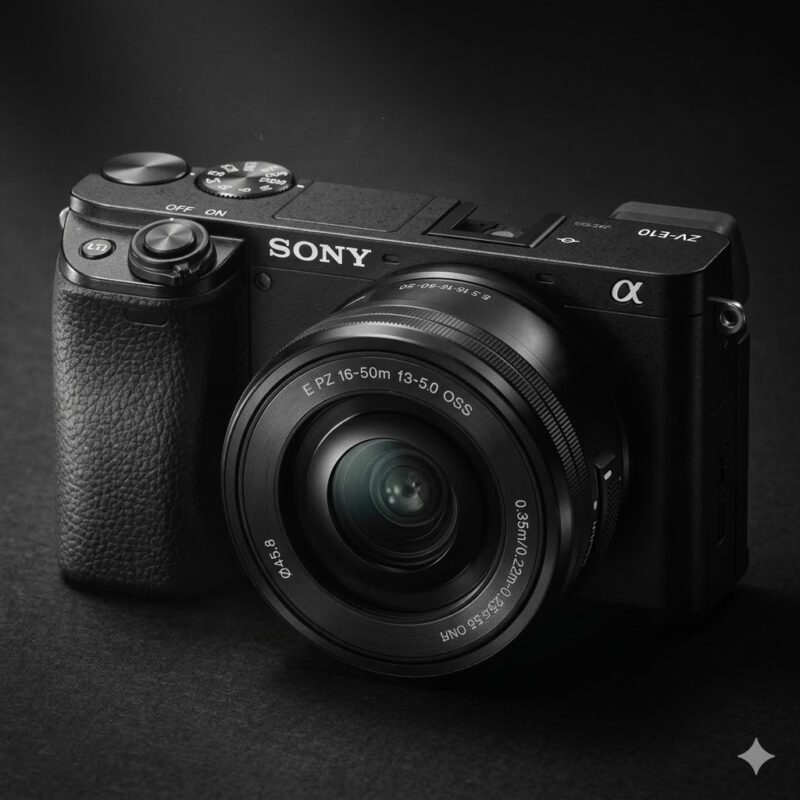
Sony’s Naming History With Speed Variants
Sony has not officially used an “H” (High Speed) designation before in its Alpha mirrorless lineup. However, the company has a long history of creating parallel product lines that serve different performance priorities within the same tier.
The A9 and A1 series demonstrate this. The A9 line has always prioritized frame rate and burst performance over resolution. The A1 brought those speeds together with high resolution. The A9 III, with its global shutter, went even further on the speed axis.
An A1 IIH would logically slot between the A9 III’s extreme burst speed and the A1 II’s resolution-speed balance. It would represent a body that keeps the A1 II’s full-frame format and flagship build quality while optimizing the sensor architecture and processor pipeline for maximum speed.
The “H” would signal that prioritization directly. High Speed, high Frame Rate and high throughput.
Community Context for the A1 IIH Rumor
It is important to be transparent about the source of this rumor. The A1 IIH does not have the same level of confirmed sourcing as, say, the X-T6 September 2026 launch date. It circulates primarily in professional photography communities, DPReview forum discussions, and among camera analysts who study Sony’s product cadence.
What gives the rumor credibility is the pattern. Sony followed the A9 with the A9 II, then the A9 III. Each represented a step forward in speed architecture. Similarly, Sony followed the original A1 with the A1 II. If historical patterns hold, a more speed-focused variant makes both business and technical sense.
The A9 III’s global shutter technology, introduced in late 2023, demonstrated that Sony’s engineering teams can solve the rolling shutter problem at the sensor level. Global shutter eliminates the banding and distortion that affect fast-moving subjects during electronic shutter shooting. Integrating that technology into a 50MP or higher-resolution full-frame body would be the logical next step, and it would define what an A1 IIH could accomplish.
Sony A1 II: The Baseline to Beat
Before examining what the A1 IIH could offer, it helps to understand what the A1 II actually delivers.
The Sony A1 II launched in late 2024 at approximately $7,000. It carries the same 50.1MP full-frame stacked BSI CMOS sensor as the original A1, paired with an updated BIONZ XR processor, a new AI processing unit, and several features borrowed from the A9 III.
Core A1 II Specifications
The A1 II delivers up to 30fps continuous shooting with full AF and AE tracking using an electronic shutter. With a mechanical shutter, burst rate drops to 10fps. Pre-Capture function captures up to one second of frames before the shutter button is fully pressed, which is particularly useful for wildlife and sports.
The IBIS system is rated at 8.5EV, a notable improvement over the original A1’s 5.5EV rating. The camera records 8K 30p video in 10-bit 4:2:0, and 4K 120p in 10-bit 4:2:2.
The EVF uses a 9.44 million dot OLED panel with 0.9x magnification. Memory card slots support CFexpress Type A 4.0 for roughly twice the write speed compared to previous generations.
Where the A1 II Falls Short for Extreme Speed Users
At 30fps, the A1 II is already fast. For most sports and wildlife photographers, 30fps is more than enough to ensure peak moment capture. However, the A9 III’s 120fps global shutter burst raised the expectation bar considerably for a subset of professional photographers.
Bird photographers, motorsport shooters, and team sport action specialists sometimes work in situations where 30fps still misses moments. A humming bird’s wingbeat at 80 beats per second, for example, produces significant wing position changes even between frames at 30fps. For that level of temporal resolution, higher frame rates matter.
Furthermore, the A1 II’s stacked sensor, while faster than standard BSI CMOS sensors, still produces some rolling shutter distortion during electronic shutter shooting at the absolute edge of motion speed. Photographers shooting subjects moving horizontally at very high velocities, such as racing cars or tennis ball tracking, can encounter visible skew artifacts.
These are edge cases for most photographers. But they are daily realities for specialists. An A1 IIH built around global shutter technology at 50MP, or around an ultra-fast readout stacked sensor at 60fps burst, would directly address those pain points.
Expected Specs for the Sony A1 IIH
These specifications draw from community discussion, historical Sony upgrade patterns, and what is technically achievable based on Sony’s demonstrated sensor capabilities.
Sensor Architecture Options
Two architectures emerge as plausible for the A1 IIH.
The first is a next-generation global shutter sensor at 50MP or higher. The A9 III uses a 24.6MP global shutter sensor. Scaling global shutter architecture to 50MP full-frame is the key engineering challenge. Sony demonstrated a 10K 105MP 100fps large format global shutter sensor at an industry event, showing the company’s ability to build extremely high-resolution sensors with global shutter at high speeds. A production-grade 50MP global shutter sensor for a mirrorless camera body is the logical application of that technology at consumer-accessible prices.
The second option is a further-evolved stacked BSI sensor with dramatically faster readout speed. The A1 II’s sensor reads out in approximately 1/250 second, which already minimizes most practical rolling shutter concerns. An A1 IIH sensor pushing readout to 1/500 second or beyond would effectively eliminate rolling shutter in virtually all real-world shooting scenarios while enabling higher burst frame rates.
Based on available signals, the global shutter route appears more consistent with how Sony differentiates its high-speed bodies. The A9 III proved the concept. The A1 IIH would scale it.
Burst Rate Predictions
At 50fps continuous shooting with full AF and AE, the A1 IIH would sit above every current mirrorless camera in its resolution class. At 60fps, it would exceed the A9 III in terms of resolution while matching it on frame rate performance.
A more conservative but still significant upgrade would be 40fps with full resolution RAW capture and lossless compression. That number represents a meaningful step up from the A1 II’s 30fps while remaining achievable within the thermal and buffer constraints of a production body.
Community discussions on DPReview forums have suggested expectations around 50 to 61MP with approximately 100fps capability for the eventual A1 successor, with the caveat that 14-bit RAW capture at those speeds demands significant buffer and storage throughput.
Buffer and Storage Requirements
Higher frame rates produce more data per second. An A1 IIH shooting 50fps at 50MP in lossless compressed RAW generates approximately 2.5 to 3GB of data per second. That exceeds the throughput of CFexpress Type A 4.0 as a single-card system.
A credible A1 IIH would need dual CFexpress Type B slots, or a new Sony-proprietary card format, to sustain maximum burst rates without immediate buffer saturation. This is one of the practical limitations that would distinguish the A1 IIH as a professional-tier tool, not a consumer-tier upgrade.
The buffer depth question is equally important. The A1 II sustains approximately 153 RAW frames at 30fps before slowing down. An A1 IIH at 50fps needs proportionally larger RAM buffer capacity to maintain comparable burst duration.
BIONZ AI Processor: Second Generation
The A1 II introduced a dedicated AI processing unit alongside the BIONZ XR processor. This dual-processor architecture handles subject recognition separately from image processing, reducing the computational load that would otherwise slow frame rates during tracking.
The A1 IIH would require a substantially more capable AI unit to handle the subject recognition demands of 50fps+ burst shooting. Second-generation BIONZ AI architecture, with faster inference speeds and expanded subject detection categories, would be necessary.
Sony’s AI autofocus already covers humans, animals (mammals and birds), insects, vehicles, trains, and aircraft. The A1 IIH would likely add improved predictive tracking for small, fast-moving objects at longer distances: a capability specifically requested by bird photographers working with 400mm or 600mm lenses.
Video Specifications
A camera positioned as a high-speed professional tool would offer video capabilities at the absolute frontier.
The A1 II records 8K 30p. The A1 IIH, with its next-generation sensor and processor, would logically target 8K 60p in 10-bit 4:2:2. It would also likely offer 4K 240p for extreme slow-motion capture, which would directly serve wildlife documentary and commercial production workflows that currently require dedicated cinema cameras for high frame rate content.
12-bit RAW video output to external recorders would complete the professional video specification. Combined with the new sensor’s potential global shutter readout, this would eliminate the rolling shutter issues that affect all current mirrorless cameras during video panning and subject motion.
Autofocus System Improvements
The A1 II’s AI autofocus is excellent. Long-term field reviews from wildlife photographers report high tracking reliability and strong keeper rates for birds in flight, mammals running across uneven terrain, and human athletes during sports events.
The A1 IIH would push this further through three improvements. First, longer prediction horizons would allow the AF system to anticipate subject position further ahead, reducing missed focus during rapid acceleration or deceleration. Second, smaller subject detection would improve tracking on distant subjects that occupy few pixels in the frame. Third, improved low-light tracking would maintain subject lock in challenging twilight conditions where current systems sometimes lose confidence.
Build and Ergonomics: What a Pro Body Requires
Professional sports photographers work with their cameras for 12 to 14 hours at a time in extreme conditions. Rain, dust, heat, and cold are not edge cases. They are daily working conditions.
The A1 IIH would carry forward the A1 II’s robust magnesium alloy body construction and extensive weather sealing. However, a few ergonomic refinements emerge as logical for an H-series body.
Vertical Integration and Grip
Some professional sports photographers attach vertical grips to their A1-series bodies for battery life and portrait orientation AF joystick positioning. An A1 IIH with an integrated vertical grip design, similar to the Nikon Z9’s approach, would appeal to photographers who find the bolt-on grip less elegant than a native tall body.
However, this would increase size and weight significantly. Many sports photographers actually prefer the A1’s compact-by-professional-standards body for its portability during travel. A standard body with optional grip compatibility is the safer prediction.
Heat Management
High frame rates generate heat. The A9 III addressed this through careful thermal design and reduced sensor resolution. An A1 IIH combining high resolution with high frame rates presents a more challenging heat equation.
Active cooling vents, as seen in Sony’s FX3 cinema camera, could appear in the A1 IIH design. Alternatively, improved heat sink materials and more efficient processor architecture could manage thermal output passively.
This is not a minor engineering concern. It is one of the core technical challenges that makes the A1 IIH aspirational rather than certain. Solving it at this performance level requires dedicated engineering investment.
Pricing and Market Position
A camera with these capabilities would price above the A1 II’s $7,000 body-only launch price. The combination of global shutter, higher frame rates, second-generation AI processing, and advanced video specifications reflects significant development investment.
Community discussions suggest expectations in the $8,500 to $10,000 range for a body-only price. This would position the A1 IIH clearly above the Canon EOS R1 and Nikon Z9 II, targeting photographers who require absolute best-in-class performance and can justify the premium through professional workflows.
At $9,000, the A1 IIH would sit in a class occupied only by digital medium format and specialized cinema cameras on the resolution side, while exceeding them on speed. That combination defines a new tier of camera performance.
Who Is the Sony A1 IIH For?
Not everyone. That is the point.
The A1 IIH is designed for a specific type of professional photographer: one who shoots high-speed action at high resolution, works in demanding environments, and bills clients at rates where a $9,000 camera body is a justifiable line item.
This includes professional sports photographers covering Olympics, World Cup, Formula 1, and national league sports where editorial clients demand large files for full-page print. It includes wildlife photographers and documentary filmmakers who need to capture rare animal behaviors with no second chance for the shot. It includes commercial photographers shooting fast-moving product sequences for automotive, sports apparel, and technology brands.
For photographers outside that profile, the A1 II is the better choice. It already delivers 30fps at 50MP, which exceeds the practical needs of most professional workflows. The A1 IIH’s additions are meaningful only at the edge cases where current performance falls short.
The A1 IIH in the Context of Sony’s 2026 Roadmap
The broader Sony Alpha lineup in 2026 shows interesting movement. The A7R VI is the most-anticipated near-term Sony release, with multiple sources confirming a 67MP sensor and 30fps 14-bit RAW burst capability. The A7 V continues to perform well as a mid-tier versatile body.
The A1 IIH, if it exists, would sit above all of these. It would be the cap on the Sony full-frame lineup: the camera that defines what the system can do when performance is the only consideration.
A mystery Sony camera observed at the 2026 Winter Olympics, photographed in protective camouflage often used for prototype testing, sparked speculation about an upcoming A9 or A1 series update. Whether that camera was an A1 IIH prototype or something else remains unknown.
What is clear is that Sony does not stop pushing the speed and resolution boundaries it invented. The company that built the original A9, the global shutter A9 III, and the dual-stack A1 II has both the motivation and the technical foundation to build the A1 IIH.
This Blog Is Part of a Three-Part Rumor Series
This is the third entry in our 2026 rumored camera series. Earlier entries covered the OM System PEN-F II, a compact Micro Four Thirds enthusiast camera returning to a beloved design heritage, and the Fujifilm X-E6, the eventual sixth-generation APS-C compact from Fujifilm’s X-E line. These three cameras represent three very different visions of where camera technology is heading: compact and elegant, refined and systematic, or raw and extreme.
What to Watch For: Sony A1 IIH Release Signals
Concrete release signals for the A1 IIH would include device registrations with regulatory agencies (FCC in the US, MIC in Japan), retailer product page appearances, and supply chain component orders visible through industry tracking services.
Given that the A1 II is only in its second year of production, a direct A1-line successor in 2026 appears unlikely. 2027 or 2028 is a more plausible window, timed to align with a major sporting event or trade show announcement. Sony has historically used sports events as product proving grounds and announcement platforms.
For now, track Sony Alpha Rumors and Photo Rumors for A1-line updates. Both sites have strong track records on Sony professional body announcements.
Final Assessment: Does the A1 IIH Make Sense?
Yes. Both commercially and technically, it makes sense.
Commercially, Sony needs a product above the A1 II to maintain its position at the absolute top of the mirrorless market. The Nikon Z9 II and Canon EOS R1 are competitive at their price points. An A1 IIH would reassert Sony’s speed leadership with a camera that no competitor currently offers an answer to.
Technically, global shutter at 50MP full-frame is Sony’s most visible undelivered capability at the professional tier. The A9 III demonstrated that global shutter at 24MP works. The path to 50MP global shutter is a matter of fab yield, thermal management, and engineering time, not fundamental physics.
The A1 IIH is not confirmed. It may not arrive under that exact name. But the class of camera it represents, an ultra-high-speed, ultra-high-resolution full-frame mirrorless body with global shutter and 50fps burst performance, is coming from Sony. The only question is when, and what it will be called.
When it does arrive, it will set a benchmark that will define professional mirrorless photography for the rest of the decade.
Read more in this series: OM System PEN-F II: The Compact MFT Comeback and Fujifilm X-E6: What Sixth Generation Means for APS-C. Also explore our guide to choosing between the Sony A1 II, Nikon Z9 II, and Canon EOS R1 for professional sports and wildlife work.
Sony’s Engineering Heritage: Why the A1 IIH Makes Technical Sense
Sony’s semiconductor division, Sony Semiconductor Solutions, supplies imaging sensors to a significant portion of the camera industry. Sony sensors appear in cameras built by Sony, Nikon, Fujifilm, and several other manufacturers. This vertical integration gives Sony a structural advantage in professional camera development: they can design sensors specifically for their own camera needs and iterate faster than competitors who source sensors externally.
The BSI Stacked Architecture Lineage
Sony introduced the first consumer mirrorless camera with a stacked BSI CMOS sensor in the A9 in 2017. That camera, with its 24.2MP stacked sensor, demonstrated that electronic shutter shooting without blackout was possible in a production camera. It achieved 20fps with complete silence and no viewfinder blackout.
The stacked architecture places a DRAM buffer beneath the pixel layer, allowing extremely fast sensor readout. The A9’s sensor read out in approximately 1/160 second, compared to roughly 1/12 second for conventional sensors of that era. This reduced rolling shutter to near-imperceptible levels during fast action photography.
The A1 in 2021 pushed the same concept to 50MP at 30fps. The A9 III in 2023 introduced global shutter, eliminating all rolling shutter rather than merely reducing it. Each step built on the previous architecture while solving new challenges.
The A1 IIH would represent the next step: either global shutter at 50MP+, or a dramatically faster readout stacked sensor that achieves effectively equivalent results. Both paths are technically coherent extensions of Sony’s current capability.
BIONZ XR and the AI Processor: Current Architecture
The A1 II uses two processing chips working in parallel. The BIONZ XR handles image processing, noise reduction, and output encoding. The dedicated AI Processing Unit handles subject recognition and tracking inference.
This dual-chip approach was the key innovation that enabled the A1 II’s combination of 30fps burst speed with reliable AF tracking. Before the AI processor, subject tracking during high-speed bursts demanded so much of the main processor that tracking reliability degraded at maximum frame rates.
For the A1 IIH at 50fps+, the AI processor would need to run at approximately 1.67 times the current inference speed to maintain the same tracking quality per frame. This is achievable through a combination of process node shrink and architectural optimization, but it requires new silicon. The A1 IIH would not simply be an A1 II with a higher frame rate setting.
The Global Shutter Question: How It Works and Why It Matters at 50MP
Global shutter is the most technically significant possible feature of the A1 IIH. Understanding what it means requires understanding why rolling shutter exists and what eliminating it actually changes.
Rolling Shutter: The Physics Problem
All CMOS sensors with rolling shutter read pixel data row by row, from top to bottom of the sensor. The time between reading the first row and the last row is the readout time, typically expressed as a fraction of a second.
When a subject moves horizontally across the frame during that readout window, different rows of the sensor capture the subject at different positions. The result is a skewed or stretched appearance called rolling shutter distortion, or colloquially “jello effect” in video.
Even the A1 II’s fast 1/250s readout produces visible rolling shutter distortion for extremely fast subjects: a baseball pitcher’s fastball, a dragonfly at close range, or a formula car at 300km/h photographed at medium distance. At 1/250s readout and typical electronic shutter speeds, these subjects cover enough distance during sensor readout to produce noticeable artifact.
Global Shutter: The Solution
A global shutter sensor reads all pixels simultaneously. Every pixel on the sensor captures its exposure at exactly the same moment. There is no row-by-row delay. Rolling shutter distortion is physically impossible.
The A9 III achieves this through a memory layer built directly into each pixel cell. Each pixel has its own capacitor that captures and holds the charge at the instant of exposure, before handing it off to the readout circuitry. This requires more complex pixel architecture and reduces the effective light-gathering area per pixel, which creates a slight light sensitivity penalty.
At 24MP in the A9 III, the penalty is manageable: the camera produces clean files at ISO 6400 and delivers useful results at ISO 12800. Scaling this architecture to 50MP introduces more complexity. More pixels mean more capacitors, more power consumption, more heat, and higher manufacturing cost.
Sony’s announcement of a 10K 105MP global shutter sensor for large format applications demonstrates the company’s ability to solve these engineering challenges at extreme resolutions. The question for the A1 IIH is whether a production 50MP global shutter sensor can be manufactured at unit economics that allow a $7,000 to $9,000 retail price.
Given Sony’s semiconductor investment and the four to five year development cycle we are likely already inside, the answer is probably yes by 2027 or 2028.
Comparing the A1 IIH to Current Professional Competition
The professional sports and wildlife camera market has multiple strong contenders in 2026. Understanding where the A1 IIH would sit requires examining what the current leaders actually deliver.
Sony A9 III: The Speed Reference
The A9 III remains the fastest mirrorless camera available in terms of blackout-free burst shooting. At 120fps with global shutter at 24.6MP, it sets the frame rate ceiling for the current generation. However, 24.6MP limits its use for commercial work requiring large prints or heavy cropping.
An A1 IIH at 50fps and 50MP+ would sacrifice the A9 III’s extraordinary frame rate advantage while gaining significantly on resolution. For sports photographers who need large editorial files, this trade is favorable. For those shooting primarily for fast news turnaround with smaller file sizes, the A9 III might still be the preferred tool.
Nikon Z9 II and Canon EOS R1: Full-Frame Competitors
The Nikon Z9 II, announced for 2026 based on multiple leak reports, targets the A1 II directly. Expected specs include ISO 32 sensitivity (lower than the Z9’s ISO 64 base), 60fps RAW bursts, and improvements to the Z9’s already strong AF performance.
If these specs are accurate, the Z9 II would challenge the A1 II more seriously than any previous Nikon professional body has challenged Sony. The A1 IIH would need to clearly differentiate itself from both the A1 II and a substantially improved Z9 II.
The Canon EOS R1, Sony’s longest-standing professional rival, uses a 24.2MP partially stacked sensor with deep subject detection AI. Canon’s Dual Pixel CMOS AF remains the standard for reliability in challenging conditions. The R1 competes primarily on AF quality and system integration rather than raw frame rate.
An A1 IIH built around global shutter at 50MP+ would offer capabilities that neither the Z9 II nor the R1 currently match: the combination of high resolution and zero rolling shutter distortion at fast burst rates.
What the A1 IIH Does That Nothing Else Can
The unique proposition of the A1 IIH is straightforward: global shutter at 50MP, at 50fps or higher, in a full-frame professional body. No current camera in any category delivers this combination.
Sports photographers covering national league events need global shutter for LED flicker elimination under stadium lights. They need 50MP for large billboard and full-spread print use cases. They need fast burst rates to maximize peak moment capture probability. Currently, they must compromise between the A9 III (speed, no flicker, low resolution) and the A1 II (resolution, minimal rolling shutter, moderate frame rate).
The A1 IIH would eliminate that compromise.
Professional Use Case Analysis
Premier Sports Photography
Consider a football photographer working on the sideline at a major international match. The stadium uses LED lighting at 100Hz or 120Hz flicker frequency. At 30fps, the A1 II occasionally captures frames where the lighting phase produces slightly darker exposure than adjacent frames. This is manageable but requires additional curation during editing.
An A1 IIH with global shutter would eliminate flicker entirely because all pixels capture simultaneously regardless of the lighting cycle. At 50fps burst, the photographer would also capture twice the peak action moments per second, dramatically increasing the probability of catching the exact moment of ball contact, celebration expression, or goalkeeper dive at full extension.
At 50MP, the resulting files support full-cover magazine use, billboard advertising, and editorial use across multiple aspect ratios and sizes without quality compromise.
Wildlife Documentary Work
A wildlife photographer in the field shooting birds of prey during hunts works with focal lengths of 500mm to 800mm. At these distances and focal lengths, rolling shutter distortion from fast-moving wing tips during electronic shutter use can produce visible artifacts even on the A1 II.
Global shutter at 50MP would eliminate wing distortion artifacts entirely. At 50fps burst, the photographer captures every wingbeat cycle with sufficient temporal resolution to select peak action within each stroke. The 50MP resolution at 800mm equivalent provides cropping flexibility that 24MP sensors like the A9 III cannot match.
For documentary productions where stills feed both editorial publication and large-format exhibition printing, this combination has no current equivalent.
Commercial Photography for Automotive Clients
Automotive advertising photographers shooting moving vehicles on test tracks face rolling shutter distortion as a daily constraint. A car passing at 100mph across the frame during electronic shutter capture on current cameras produces a backward-slanting B-pillar on the vehicle: a distortion that requires correction in post-production.
Global shutter eliminates this. The vehicle appears perfectly rectilinear regardless of its speed relative to the camera. For photographers shooting with multiple burst frames to select the exact body angle and wheel position, an A1 IIH at 50fps with no rolling shutter and 50MP resolution would be the definitive tool for this workflow.
Video: The Professional Cinema Crossover Potential
The A1 IIH’s video specification would likely exceed the Sony FX3 and FX6 cinema cameras in certain areas, creating crossover appeal for commercial video directors.
8K at Higher Frame Rates
The A1 II delivers 8K 30p. An A1 IIH with its next-generation sensor and processor would target 8K 60p for the first time in a full-frame mirrorless body. This capability directly serves two markets.
First, sports documentary productions that want 8K master deliverables at 60fps for slow-motion opportunities when reduced from full frame rate. At 60fps, slowing footage to 24fps produces 2.5x slow motion, which is sufficient for most sports highlight work without requiring specialized high-speed cameras.
Second, episodic commercial production that needs 8K capture for ultra-high-resolution delivery to streaming platforms that have begun supporting 8K content.
Overcranked 4K for Maximum Quality
A byproduct of 8K 60p capture is that the camera can deliver oversampled 4K 60p from the full sensor, using all 8K sensor pixels to compute each 4K output pixel. This produces significantly cleaner, sharper 4K than native 4K capture, with better noise performance and moiré rejection.
For video work, this means the A1 IIH’s 4K output would visually exceed the quality of many dedicated cinema cameras at equivalent recording settings.
Global Shutter for Video Directors
Video directors currently accept rolling shutter as an unavoidable limitation of fast camera movement. Pan shots require careful speed management. Handheld work demands post-stabilization that may crop out some rolling shutter artifacts. Action sequences with fast lateral subject movement require slow pan speeds or post-correction.
Global shutter eliminates all of these constraints. Directors can pan freely, move handheld aggressively, and capture any subject at any speed without distortion. For commercial directors who currently choose the A9 III’s 24MP global shutter over the A1 II’s 50MP rolling shutter, the A1 IIH at 50MP with global shutter would remove the only significant limitation of the A9 III for their work.
System Accessories and Workflow for the A1 IIH
Professional-tier cameras require professional-tier support systems. An A1 IIH photographer working at 50fps with 50MP files needs the right infrastructure across cards, cabling, and post-production hardware.
Storage Solutions
CFexpress Type B cards currently offer higher sustained write speeds than CFexpress Type A. The Sony A1 II uses Type A cards for compatibility with the broader Sony ecosystem. An A1 IIH would likely upgrade to Type B, or potentially a new Sony card format capable of sustaining the write speeds required for 50fps 50MP capture.
At 50fps with 50MP uncompressed RAW files of approximately 50MB each, the camera generates 2.5GB per second during maximum burst shooting. CFexpress Type B cards currently sustain approximately 1.7 to 2GB/s write speeds at the top tier. This suggests that an A1 IIH either requires the next generation of CFexpress or uses lossless compression as the minimum quality tier during maximum burst to reduce the data rate to sustainable levels.
This is not unique to Sony. Every camera pushing frame rate and resolution simultaneously faces the same physics. The engineering solution becomes part of the product design.
Compatible Telephoto Glass
The A1 IIH’s performance proposition is best realized with Sony G Master telephoto lenses. The FE 400mm f/2.8 GM and FE 600mm f/4 GM represent the current pinnacle of Sony’s sports and wildlife optics. Both lenses feature XD (eXtreme Dynamic) linear motors that focus fast enough to keep pace with the A1 II’s 30fps tracking.
For the A1 IIH at 50fps, Sony may need to introduce updated versions of these lenses with even faster focus motor response times. Whether existing GM telephotos can fully utilize 50fps AF tracking depends on how quickly their focus actuators can cycle between corrections at that frame rate.
The FE 100-400mm f/4.5-5.6 GM and FE 200-600mm f/5.6-6.3 G provide more flexible zoom solutions for photographers who cannot dedicate space and budget to prime telephotos.
Battery Life and Practical Endurance
Professional sports photographers need cameras that survive full shooting days. A Premier League match runs 90+ minutes. An Olympic athletics session runs four to six hours. A wildlife stakeout at a nest site can run all day.
The A1 II’s battery life is rated at approximately 530 shots per charge using the electronic viewfinder. Under continuous burst shooting at 30fps, battery life drops significantly. Cold weather reduces it further.
An A1 IIH at 50fps with a next-generation sensor running global shutter architecture would draw more power than the A1 II. Larger battery capacity, or compatibility with a Sony-standard extended battery format, would be necessary to maintain comparable real-world shooting endurance.
The VG-C4EM vertical grip, or a successor model, provides dual-battery capacity and is a standard piece of equipment for professional sports photographers using the A1 II. An A1 IIH would almost certainly support a vertical grip option.
Firmware Support and the Sony Professional Ecosystem
Sony’s approach to firmware updates in the professional body segment has improved substantially since the original A1. The A1 II received firmware version 2.0 with significant AF improvements after launch, demonstrating Sony’s commitment to post-release development.
The A1 IIH, as a professional flagship, would receive ongoing firmware support throughout its product life. Sony’s professional imaging division provides dedicated support for broadcast and cinema productions, including custom firmware configurations for specific deployment requirements.
This ongoing support structure is part of the total value proposition for professional purchasers. A $9,000 body that receives regular AF and feature improvements over a four to five year product cycle represents a better total investment than a less-supported alternative at the same price.
Frequently Asked Questions: Sony A1 IIH
Is the Sony A1 IIH officially confirmed? No. The A1 IIH has not been announced or officially confirmed by Sony. It is a rumored high-speed variant of the A1 line, discussed in professional photography communities and analyst circles.
When might the A1 IIH be announced? Based on Sony’s typical product cycle and the relative newness of the A1 II (launched late 2024), the A1 IIH would most plausibly arrive in 2027 or 2028. 2026 is unlikely for a direct A1-line successor.
Will it use a global shutter sensor? This is the most technically compelling speculation. Given the A9 III’s success with global shutter at 24MP, scaling the technology to 50MP for the A1 IIH is Sony’s logical engineering direction.
How would it compare to the A9 IV? If both exist, the A9 IV would likely prioritize extreme frame rates at moderate resolution (following the A9 series philosophy), while the A1 IIH would emphasize the combination of high resolution and high speed. They would serve different primary use cases within the professional tier.
Would existing Sony FE lenses work on the A1 IIH? Yes. The A1 IIH would use the same Sony E-mount as all Alpha mirrorless cameras. All existing Sony FE lenses would be fully compatible.
The Bigger Picture: What the A1 IIH Represents for Professional Photography
The A1 IIH is not merely another camera in a long line of incremental improvements. It would represent a threshold crossing: the point at which professional photographers no longer need to choose between resolution and speed, or between resolution and global shutter, or between video quality and stills performance.
Every significant advance in professional camera technology has ultimately been about removing constraints. The original A9 removed the speed constraint from mirrorless cameras. The A1 removed the resolution constraint from high-speed cameras. The A9 III removed the rolling shutter constraint from mirrorless electronic shutters. The A1 IIH would remove all remaining constraints simultaneously.
When a professional camera offers 50MP at 50fps with global shutter, the answer to almost every professional sport and action photography question is yes. Do you have enough resolution for large-format print? Yes. Do you have fast enough burst rates to maximize peak moment probability? Yes. Can you use electronic shutter under stadium LED lighting without flicker? Yes. Can you pan freely without rolling shutter distortion? Yes.
That is not a marginal upgrade. That is a category-defining product. And it is the direction Sony’s technology roadmap has been building toward since the A9 launched in 2017.
This blog is the third in our 2026 rumored camera deep-dive series. Read part one on the OM System PEN-F II and part two on the Fujifilm X-E6. For current Sony Alpha system news and professional camera reviews, explore our Sony Alpha buying guide for 2026 and our breakdown of CFexpress card performance for professional burst shooting.
Read More from AltBuzz
Read more from Altbuzz for camera reviews, rumors, and detailed specs. AltBuzz delivers trusted and easy-to-understand photography content.
Subscribe AltBuzz YouTube Channel
Stay updated with camera reviews, rumors, and comparisons. AltBuzz shares regular camera content. Subscribe Altbuzz to stay ahead of every major camera announcement.